
When “What If” Becomes a Weapon
Why Fear Is the Most Powerful Tool of Control

Healing means the ability to see things as they are; not the way we think they are or wish they were. That is my hope for each of us ~ Britta
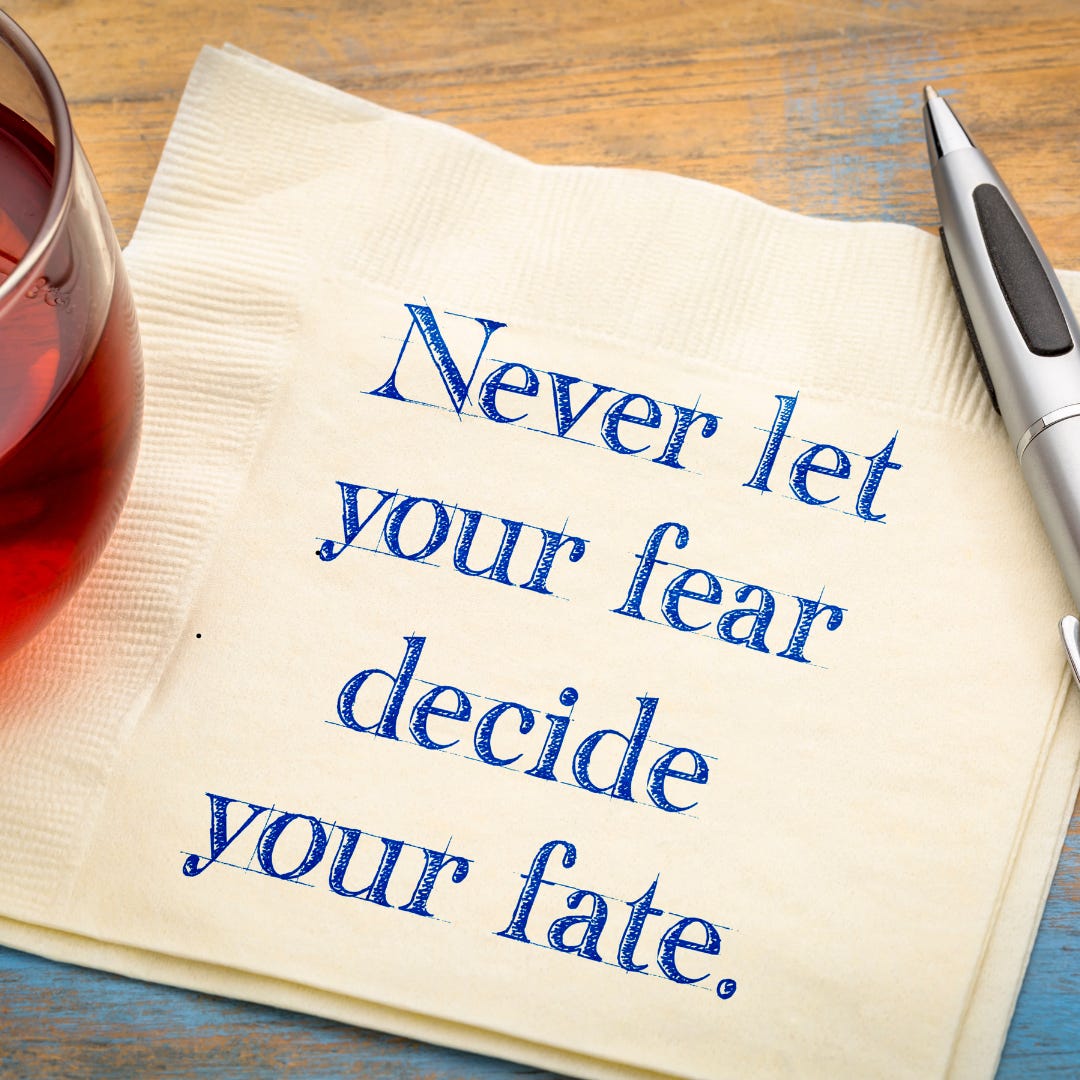
One of the most powerful ways to manipulate people is remarkably simple: convince them to be afraid of something they cannot see.
When fear takes hold, especially fear of the unknown, people quickly surrender their judgment, their questions, and sometimes even their autonomy. When the danger cannot be clearly seen, it’s nearly impossible to disprove. And that ambiguity gives enormous power to the person proposing the threat.
This administration keeps playing on fear, again and again. For example:
Messaging about immigration includes imagery and content that dehumanize immigrants, playing on the fear of ”others”;
The administration designated groups like antifa as “domestic terrorists,” despite critics noting that it is not a single organization with legal standing;
Top officials rush to characterize people like Alex Pretti, Renee Good, Mark Kelly, Marjorie Taylor Greene, and even democrats as a whole, as domestic terrorists, traitors, and lunatics.
And the most recent concern centers on the fear that justifed bombing Iran. The news cycle is flooded with explanations. One minute, a single reason is offered, and then, when that reason is challenged, another appears. The narrative shifts, the explanations multiply, and we are all left trying to piece together what the f*ck is going on.
The result is confusion, and confusion is a perfect place for fear.
The Power of Invisible Threats
When a threat is visible and immediate, people can evaluate it. They can ask questions and can assess.
But when the danger exists somewhere in the shadows, something that might happen, could happen, or may be an imminent threat, we try to fill in the gaps. We imagine.
Imagination is a great place for creativity, but when it’s focused on a “possible” threat, our imagination can bring terrifying images. Fear grows rapidly in that space.
The administration’s most recent reason for attacking Iran is based on the claim that an attack on the United States was imminent. That this was a proactive response, and it was necessary.
Perhaps the threat was real. Perhaps not. To date, no intelligence has been able to substantiate that claim.
The problem is that the public is being asked to accept something that cannot be proven. History shows how powerful that tactic is, bringing to mind the WMD’s that never existed.
We remember the lead-up to the Iraq War under President George W. Bush. The central justification was the belief that Iraq possessed weapons of mass destruction.
The intelligence was uncertain but the President was convinced. The evidence was incomplete but the narrative was strong. The message was clear: we should be afraid of something that might be out there.
That fear ultimately carried this country into a war based on an unfounded claim. The parallels are difficult to ignore.
Fear as a Tool of Control
Interestingly, this dynamic is not limited to geopolitics. It shows up in the most intimate places, abusive partnerships and marriages.
In my work with clients attempting to leave abusive partners, the most important step is often helping them see clearly again. Rather than using physical force, many abusers thrive on confusion and fear. Most often, they manufacture threats and it’s very effective (sound familiar?)
They convince their partner that terrible things will happen if they leave. They suggest that no one else will help them. They imply that the children will suffer, or that the system will turn against them. The most effective tactic often involves the children themselves.
Suggesting that harm could come to a child strikes fear directly into the heart of any parent. Mothers will often endure extraordinary hardship if she believes it will keep her children safe.
Once that fear takes hold, the abuser gains control. It doesn’t matter whether the threat is real, it only matters that you believe it.
When fear takes the place of evidence, uncertainty feels like a threat rather than an opportunity to better understand the situation.
This is the danger of allowing decisions to be ruled by fear of “possible” threats. When conversations are overwhelmed with ”what ifs,” people stop asking the harder questions:
What evidence exists?
Who benefits from this narrative?
What facts support the claim?
Fear encourages obedience, whereas evidence encourages accountability. And that is the one thing abusers hate more than anything.
Breaking the Cycle
The only reliable way to push back against abuse of power, whether in relationships or in our nation, is to refuse to let fear do the thinking for us. It requires us to:
Slow down when the message feels urgent.
Ask for evidence when the narrative is emotional.
Resist the temptation to assume the worst simply because someone insists it might happen.
Abuse thrives when people are too afraid to question. Clarity, facts, and critical thinking disrupt that power. Fear can move people quickly, but the truth is always worth taking the time to discover.
We must keep speaking up, asking questions, and most of all, be unafraid to offend those who benefit most from our silence.
